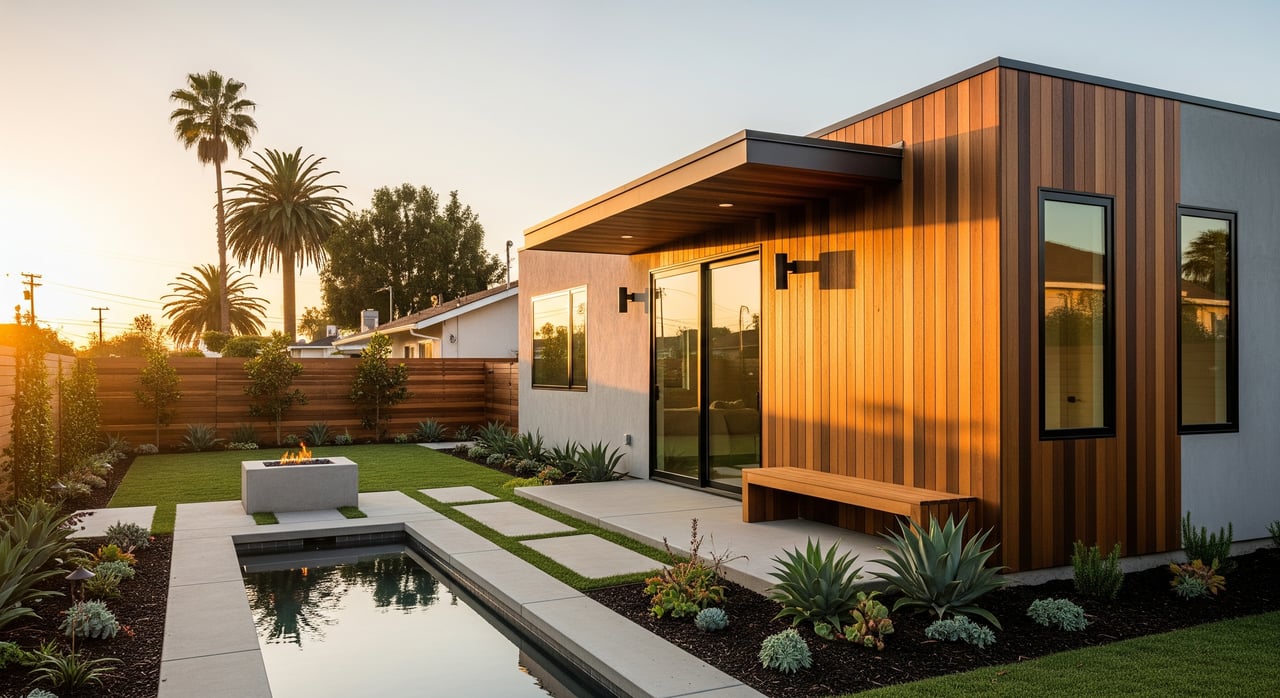
What if your Gardena backyard could become a steady income stream? Many South Bay homeowners are exploring accessory dwelling units to add flexibility, housing options, and long-term value. You want clear numbers, realistic timelines, and a simple way to assess your property before you spend money. This guide breaks down ADU costs, rent potential, ROI basics, timelines, and a Gardena-focused feasibility checklist so you can plan with confidence. Let’s dive in.
Why ADUs make sense in Gardena
California laws passed since 2017 opened the door for more ADUs by streamlining approvals and reducing local barriers. Most ADUs now go through ministerial review, owner-occupancy rules are limited in many cases, and parking requirements are relaxed under specific conditions. State guidance supports detached ADUs up to roughly 1,200 square feet and JADUs around 500 square feet, subject to local standards that comply with state rules.
In Gardena, the Planning Division and Building & Safety implement these standards. Local rules set setbacks, height limits, and submittal requirements. Impact and utility fees can vary by size, with different fee treatment often applying to smaller ADUs under 750 square feet. Always confirm the latest details with the City of Gardena before you begin design.
ADU types and cost ranges
Costs vary by scope, site, and finishes. The ranges below reflect typical Los Angeles/South Bay conditions and are estimates. Obtain multiple local bids.
Junior ADU (JADU)
- Interior conversion of existing space. Lowest-cost path.
- Typical range: $30,000 to $100,000 depending on egress, mechanicals, and finish level.
Garage conversion
- Converts attached or detached garage to a dwelling.
- Typical range: $60,000 to $180,000. Structural upgrades, plumbing, and higher-end finishes add cost.
Attached conversion/expansion
- Reconfigures or adds space attached to the main house.
- Typical range: $80,000 to $250,000+ depending on foundation and roof ties.
Detached new-build ADU
- Freestanding backyard unit with the most layout flexibility.
- Typical range: $150,000 to $450,000+ based on size (about 400 to 1,200 sq ft), site work, and finishes.
Modular or prefab ADU
- Can compress schedule and reduce cost variability in some cases.
- Competitiveness depends on the model, transport, installation, and site work.
Cost per square foot
- LA-area ADU builds often land between $200 to $500+ per sq ft.
- JADUs and basic garage conversions trend lower; new detached ADUs with premium finishes trend higher.
What drives cost in the South Bay
Local conditions can nudge your budget up or down. Plan for these factors:
- Lot slope and tight yards that require retaining walls or careful staging.
- Limited equipment access through narrow side yards or no alley access.
- Utility capacity, such as electric panel upgrades or a new sewer lateral.
- Contractor demand and permitting timelines that impact labor availability and schedule risk.
Build a complete budget
When you estimate, include both hard and soft costs so you have a complete picture:
- Hard construction: framing, roofing, insulation, windows/doors, interior finishes.
- Site work: foundation or slab, grading, retaining walls, pathways, landscaping restoration.
- Utilities: water, sewer adjustments, gas if applicable, electric service upgrades, possible separate meter, and sewer lateral work.
- Soft costs: architecture/design, structural engineering, Title 24 energy compliance, soils report or survey if needed, special inspections.
- Permits and fees: plan check, building permits, school/park/traffic impact fees as applicable, and connection fees. Fee treatment can differ for small ADUs.
- Contingency: 10 to 20 percent for unknowns and general conditions.
- Fixtures and appliances: kitchen, bath fixtures, HVAC, laundry.
- Financing: interest during construction and loan fees.
- Ongoing: taxes and insurance adjustments.
Rent potential and ROI basics
To estimate rent, use local comps for studios, 1-bedrooms, and 2-bedrooms in Gardena and nearby South Bay areas. Adjust for size, finishes, parking, private entry, laundry, and access to transit or job centers. New, well-designed ADUs can command a premium, while dated finishes or limited parking can lower rent.
Here is a simple example to frame ROI:
- If your ADU costs $200,000 to build and rents for $2,000 per month (that is $24,000 per year), the gross yield is 12 percent.
- Net yield will be lower after expenses like maintenance, vacancy, taxes, insurance, management, and debt service. Many owners see net yields in the single digits depending on financing and operating costs.
- Payback period equals total cost divided by net annual cash flow and varies widely by project.
- Consider potential long-term gains like property appreciation and tax benefits such as depreciation and expense deductions. These are personal to your situation, so consult a CPA.
Financing choices that affect returns
- Cash: maximum cash yield and simplicity, but no leverage.
- HELOC or home equity loan: common for homeowners funding conversions.
- Construction loan: short-term interest during build, then refinance upon completion.
- Renovation loans: certain programs can apply to conversions.
- Conventional mortgages: some lenders have ADU guidance; requirements vary.
Timeline and permitting in Gardena
Durations vary by scope and season. Plan conservatively and build in slack.
Typical timeline
- Planning and feasibility: 1 to 3 weeks.
- Design and permit documentation: 4 to 12 weeks.
- City plan check and permit issuance: 4 to 12 weeks after submittal, longer in busy periods.
- Construction windows:
- JADU or garage conversion: 4 to 12 weeks.
- Attached conversion: 8 to 20 weeks.
- Detached new ADU: 12 to 36+ weeks.
- Final inspection and certificate of occupancy: 1 to 4 weeks.
Permitting checklist
Prepare a complete submittal to reduce back-and-forth:
- Site plan and scaled floor plans with setbacks and existing structures.
- Elevations for detached ADUs.
- Title 24 energy calculations and compliance documentation.
- Structural calculations for foundation changes or structural alterations.
- Plumbing, mechanical, and electrical plans.
- Grading and drainage information if needed.
- Utility capacity details and planned upgrades.
- Trash and recycling plan per city requirements.
- Compliance with habitability standards for rentals.
- Payment of plan check, permit, and connection or impact fees as applicable.
Gardena feasibility checklist
Use this quick screen before you hire a designer. If any item is a no or uncertain, contact the City of Gardena Planning Division or Building & Safety.
- Zoning and eligibility: confirm the property is within Gardena city limits and in a zone that allows ADUs.
- Lot layout and setbacks: measure usable rear and side-yard areas, and check local setback, height, and lot coverage rules.
- Unit count and ownership: confirm existing units and any condo or common-interest restrictions.
- Access: ensure safe resident access and workable construction access through a driveway or alley.
- Utilities: check sewer lateral capacity, water supply, and electric panel size. Older panels often need upgrades for separate meters.
- Parking: verify if off-street spaces are required or if state exemptions apply, including near-transit cases or when replacing a demolished garage.
- HOA and easements: review CC&Rs, recorded easements, and any overlays that could limit placement.
- Drainage and grading: assess whether new grading or stormwater measures are necessary.
- Rentability factors: consider proximity to transit, job hubs, and daily amenities, and any site noise or air traffic impacts.
Design and site considerations
A well-planned ADU balances code, cost, and livability:
- Size and layout: match the bedroom count to your rent target and budget. Larger units can command higher rent but cost more to build.
- Privacy and access: separate entry and a defined path help with leasing and everyday use.
- Parking strategy: plan early if spaces are required. Some sites qualify for state allowances that reduce or waive parking.
- Utility plan: check whether you will use shared or separate meters and whether service upgrades are needed.
- Construction logistics: narrow side yards or no alley access can affect schedule and labor costs.
Next steps and who to contact
- City of Gardena Planning Division and Building & Safety: confirm setbacks, height limits, submittal requirements, and current fees.
- California Department of Housing and Community Development (HCD): review ADU summaries and state standards.
- Utility providers: confirm meter and capacity requirements with the electric, gas, and water providers that serve Gardena.
- Professional team: speak with a local architect/designer, structural engineer, and at least two or three ADU-experienced contractors. Consider a permitting expediter.
- Lender and CPA: align financing with your build plan and confirm tax implications.
If you want current Gardena rent comps, a preliminary ROI sketch, or referrals to reputable local designers and contractors, reach out to Theresa Bruno. As a South Bay broker with deep neighborhood experience, Theresa can help you evaluate options, prepare for permitting, and position the finished unit for successful leasing.
FAQs
How much does it cost to build an ADU in Gardena?
- Typical LA-area ranges run from about $30,000 to $100,000 for JADUs, $60,000 to $180,000 for garage conversions, and $150,000 to $450,000+ for detached ADUs, depending on site and finishes.
What rent can I expect for a Gardena ADU?
- Rents depend on size, finishes, parking, laundry, and location; check current local comps for studios, 1-bedrooms, and 2-bedrooms to set a conservative estimate.
Will I need to add parking for my ADU in Gardena?
- State rules allow parking waivers in many situations, including certain near-transit cases, but you should confirm requirements with the City of Gardena for your specific site.
How long does ADU permitting and construction take in Gardena?
- Simple conversions can take a few months from design to completion, while new detached units commonly take 9 to 12+ months; plan check and construction windows vary by season and scope.
Do I have to live on the property if I build an ADU?
- Many owner-occupancy requirements have been limited by state law, but local implementation varies; confirm current rules with the City of Gardena.
Can I use my ADU for short-term rentals in Gardena?
- Short-term rental rules are set locally and may restrict stays under a certain length; review Gardena’s current ordinance and any HOA rules before planning short-term use.
What does a simple ADU ROI look like for Gardena?
- As an example, a $200,000 build renting for $2,000 per month yields about 12 percent gross before expenses; net returns will be lower after vacancy, operating costs, and financing.