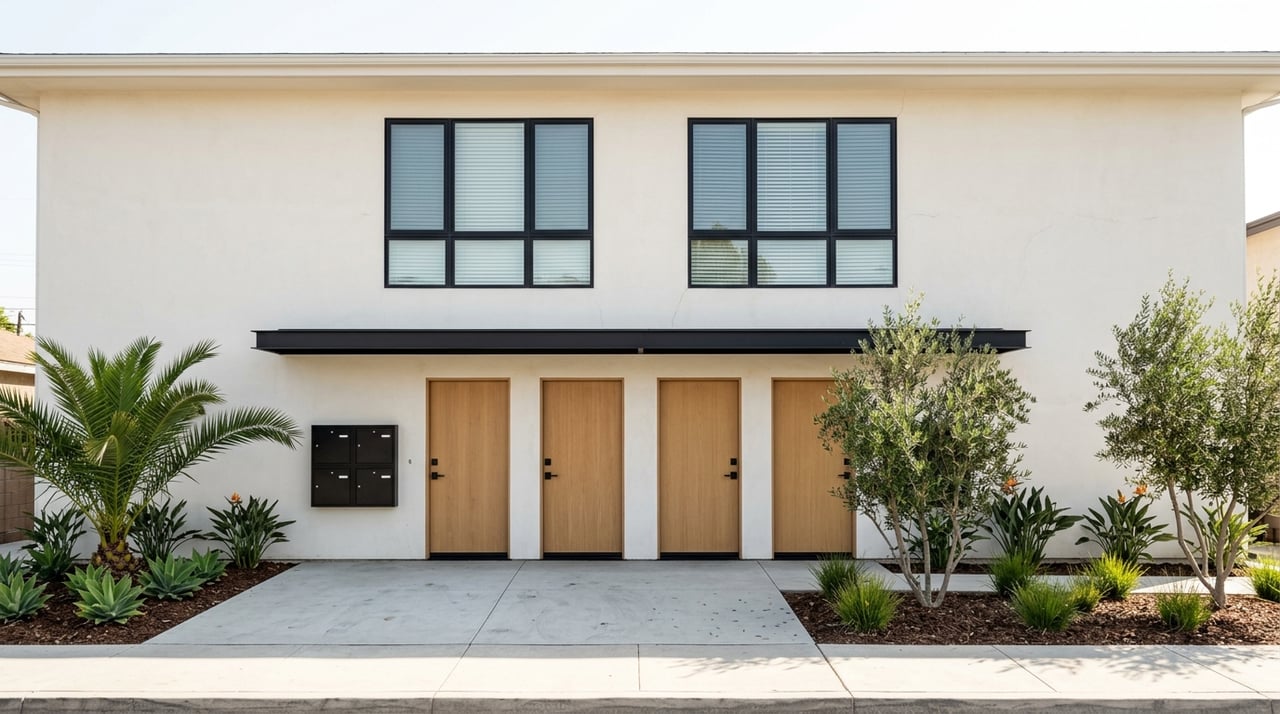
If you are comparing a Gardena fourplex to a single-family rental, you are really deciding how you want your investment to work for you. Some buyers want higher income and multiple rent checks each month. Others want simpler management, a wider resale pool, and more flexibility down the road. In Gardena, both paths can make sense, but the better fit depends on your goals, your risk tolerance, and how carefully you underwrite the property. Let’s dive in.
Gardena Offers Both Paths
Gardena has a housing mix that supports both single-family and small multifamily investing. The city’s 2020 housing stock included 44.5% detached single-family homes, 7.8% attached single-family, 11.7% properties with 2 to 4 units, and 30.4% with 5 or more units. That means you are not choosing between a rare niche property and a mainstream one. Both asset types are part of the local housing base.
Demand also appears steady. Census QuickFacts shows a 48.8% owner-occupied rate, a median owner-occupied home value of $700,600, and median gross rent of $1,809. Gardena’s housing element also reported low vacancy rates, with 1.1% for homeowners and 2.9% for renters, which the city describes as a sign of high demand.
Why Investors Look at Fourplexes
The main reason investors look at a fourplex is income density. You have multiple units on one lot, which can create more gross rent than a single-family rental. In simple terms, more doors can mean more income potential.
Current asking-rent data helps show why that matters in Gardena. Zillow’s May 2026 rental data shows an average two-bedroom rent of $2,550 in Gardena. A current fourplex listing at 1267 W 166th is marketed as four vacant 2-bedroom, 1-bath units, and at that rent level, the building could produce about $10,200 per month, or $122,400 per year in gross scheduled rent.
At the $1.285 million asking price for that property, that works out to roughly a 9.5% gross yield before expenses. That is not a cap rate, and it does not account for vacancy, taxes, insurance, repairs, utilities, or management. Still, it shows why many investors start with the fourplex side of the comparison.
Income Is Spread Across More Units
A fourplex also spreads vacancy risk. If one unit is vacant, 25% of the income is offline. With a single-family rental, one vacancy means 100% of the rent stops until the home is leased again.
In a market with low vacancy, that diversification can be appealing. It gives you more than one income stream from the same property. For many buy-and-hold investors, that is a meaningful advantage.
Fourplexes Can Fit Owner-Occupants Too
Small multifamily is not just for traditional investors. FHA loans can be used on 1 to 4 unit properties with down payments as low as 3.5%, and Freddie Mac also offers financing for 2 to 4 unit owner-occupied primary residences.
That matters if you are considering living in one unit and renting the others. For some buyers, a Gardena duplex, triplex, or fourplex becomes a practical house-hacking option. It can lower your out-of-pocket housing cost while helping you build long-term equity.
Why Investors Still Choose Single-Family Homes
Single-family homes remain attractive for a reason. They are often easier to manage, easier to understand, and easier to sell later. Many investors like the simplicity of having one tenant, one structure, and fewer shared systems to monitor.
Current Gardena listing data also shows a healthy single-family market. Realtor.com shows 59 single-family homes for sale with a median listing price of $790,000, while Redfin reported a March 2026 median sale price of $738,000 and median days on market of 43.
Single-Family Homes Can Be Simpler
For many buyers, simplicity has real value. A single-family rental usually has fewer moving parts than a fourplex. There are fewer tenants, less turnover exposure across multiple units, and fewer common-area issues to manage.
That can matter even more in Gardena because the housing stock is older. The city’s housing element says nearly 89% of the housing stock was built before 1990, and older buildings generally require more maintenance and higher costs. That age profile affects both property types, but four units often mean more plumbing fixtures, more appliances, more wear, and more chances for repair items to stack up.
Single-Family Homes May Offer ADU Upside
The income gap between a fourplex and a house can narrow if a single-family property has room for an accessory dwelling unit. Gardena allows ADUs in all residential zones, subject to city standards. That creates another path for investors who want rental income without buying a traditional multifamily building.
If a lot can support an ADU, your long-term strategy may look very different from a standard one-unit rental. You could create extra income, add flexibility, or improve future resale appeal. In Gardena, that possibility makes some single-family properties worth a closer look.
The Rent Math Favors Fourplexes
When investors compare these options, they often start with back-of-envelope rent math. In Gardena, the current numbers tilt toward fourplexes on gross income. Four units rented at about $2,550 each can produce much more revenue than one house rented at current market levels.
For comparison, Zillow’s May 2026 rental data shows an average rent of $3,595 for a three-bedroom home in ZIP code 90247. Against a median single-family listing price of $790,000, that works out to roughly a 5.5% gross yield before expenses. Again, this is only a rough estimate, not a cap rate.
That difference helps explain investor behavior. If your goal is maximizing gross rent per dollar invested, the fourplex often wins the first screen. If your goal is simpler ownership and more flexible use, the single-family home may still come out ahead.
The Tradeoffs Go Beyond Income
A good investment decision is not just about gross yield. You also need to think about operations, property condition, parking, and day-to-day complexity. In Gardena, those details can change the answer quickly.
The city notes that homes more than 30 years old are likely to require renovation and maintenance. Since a large share of Gardena housing is older, reserve planning is important whether you buy a house or a fourplex. Roofs, sewer lines, electrical systems, windows, and deferred maintenance can affect your returns more than a simple rent calculation suggests.
Fourplexes Usually Require More Oversight
A fourplex can bring higher income, but it often brings more management work too. You may have more tenant turnover, more maintenance calls, more utility questions, and more shared-area upkeep. You also have more compliance points to track.
Parking can be one of those practical issues. Gardena’s residential zone summary shows that R-2 and R-3 multifamily zones require two parking spaces per unit plus guest parking, while R-4 and MUO have more flexibility and allow tandem parking. That means site layout matters a lot when you are evaluating a small multifamily property.
Single-Family Homes Usually Offer Broader Resale Appeal
Single-family homes often appeal to a wider future buyer pool. Some buyers will be investors, but others may be owner-occupants looking for a primary residence. That broader resale audience can matter if you want more exit options later.
A fourplex is usually a more income-focused purchase. Buyers tend to study rents, expenses, parking, condition, and local rules more closely. That does not make it a worse investment, but it can make the resale conversation more specialized.
California Rules Matter in Gardena
When you compare a Gardena fourplex and a single-family home, statewide rent rules should be part of your review. California Civil Code 1947.12 limits annual rent increases to 5% plus CPI or 10%, whichever is lower, and Civil Code 1946.2 sets just-cause eviction rules after the occupancy thresholds are met.
Some properties are exempt, including housing with a certificate of occupancy from the previous 15 years, single-family owner-occupied residences, and some separately alienable single-family or condo properties if notice and ownership conditions are met. Because Gardena has an older housing stock, many older triplexes and fourplexes are more likely to fall inside these statewide rules than a typical owner-occupied single-family home. The exact answer depends on the property and how it is held, so investors need to confirm the facts before moving forward.
How Many Investors Decide
In practice, most Gardena investors choose based on one of three priorities: income, simplicity, or flexibility. If income is your main goal, a triplex or fourplex often deserves a closer look. If simplicity and resale options matter most, a single-family home may be the better fit.
If you want flexibility, the decision often comes down to the lot and the layout. A single-family home with ADU potential can offer a hybrid strategy. A well-located fourplex with solid parking and functional unit layouts may offer stronger immediate income potential.
A Practical Gardena Decision Checklist
Before you decide, ask yourself these questions:
- Do you want higher gross income or simpler ownership?
- Are you comfortable managing an older building with multiple units?
- Does the property have parking that works well for the current layout?
- Are current rents at, above, or below today’s market asking levels?
- Could a single-family lot support an ADU under Gardena standards?
- Are you prepared to review California rent cap and just-cause rules carefully?
- Is your likely exit strategy resale to an owner-occupant, another investor, or long-term hold?
The best Gardena fourplex opportunities are often value-add buildings with usable parking, practical floor plans, and rents that still have room to grow within the law. The best single-family opportunities are often homes with strong rental appeal, easier management, or ADU potential that creates another layer of income.
Whether you are buying your first investment or refining a small portfolio, local property details matter as much as headline numbers. If you want help comparing Gardena opportunities with a clear, practical strategy, connect with Theresa Bruno for straightforward guidance tailored to your goals.
FAQs
What makes a Gardena fourplex appealing to investors?
- A Gardena fourplex can offer higher gross rent, multiple income streams, and less vacancy concentration because one empty unit affects only part of the property’s income.
Why do some buyers in Gardena still prefer a single-family rental?
- Many buyers prefer a Gardena single-family home because it can be easier to manage, may appeal to a broader resale audience, and can offer flexibility for owner-occupancy or ADU plans.
How does older housing stock affect Gardena investment decisions?
- Gardena’s housing element says nearly 89% of the housing stock was built before 1990, so reserve planning for repairs and upgrades is important for both houses and small multifamily properties.
How do current rents compare for Gardena fourplexes and single-family homes?
- Using current asking-rent data, four 2-bedroom units at about $2,550 each produce much more gross rent than one 3-bedroom house at about $3,595 per month, which is why fourplexes often look stronger on gross yield.
Do California rent rules affect Gardena fourplexes and single-family homes the same way?
- No. Older Gardena triplexes and fourplexes are more likely to fall under California’s rent cap and just-cause rules, while some single-family properties may be exempt if they meet the law’s notice and ownership conditions.
Can an ADU change the single-family versus fourplex comparison in Gardena?
- Yes. Because Gardena allows ADUs in all residential zones subject to city standards, a single-family property with ADU potential can create added income and narrow the gap with a traditional multifamily investment.