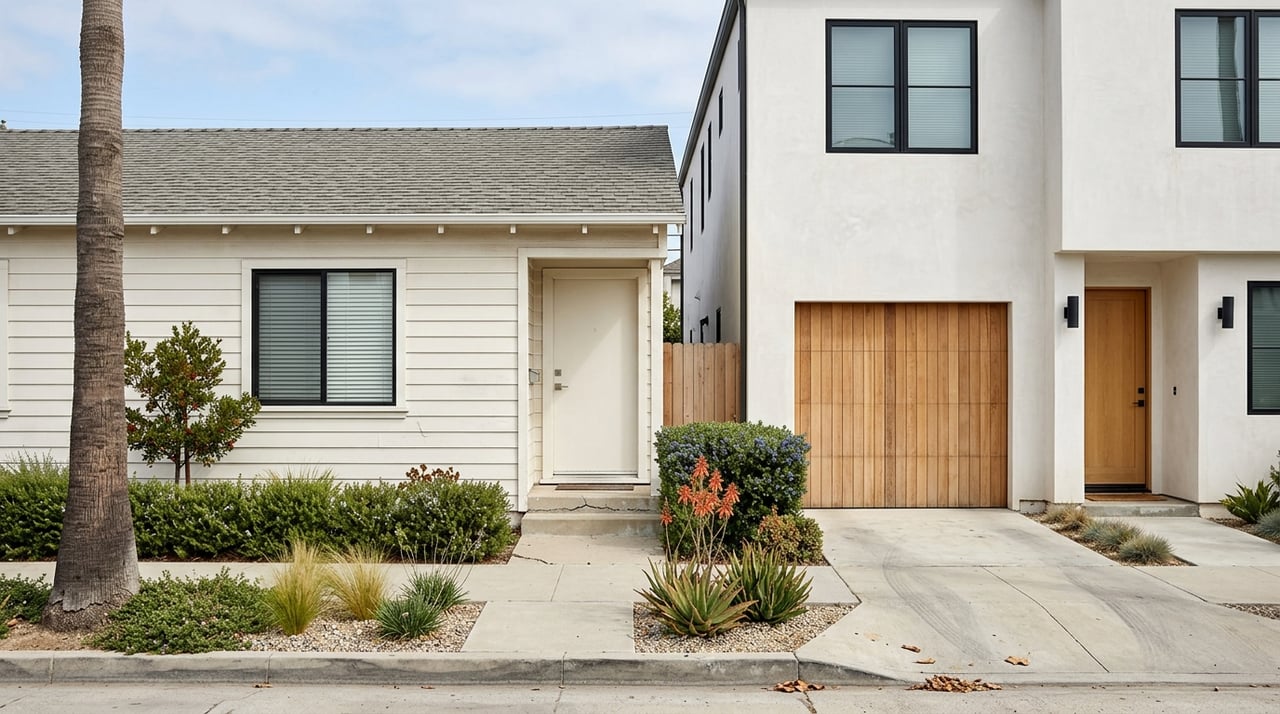
Choosing between North Redondo and South Redondo sounds simple until you realize both offer strong demand, similar headline pricing, and very different day-to-day experiences. If you are trying to decide where you will feel most at home, the right answer usually comes down to how you want to live, move around, and spend your budget. This guide breaks down the key differences so you can compare each area with more confidence. Let’s dive in.
Start With the Basic Split
Redondo Beach is commonly divided at 190th Street. In simple terms, North Redondo is the inland area north of that line, while South Redondo includes the pier, harbor area, and the beach-oriented coastline west of Pacific Coast Highway.
That geographic split shapes almost everything else, from housing style to walkability to your daily routine. If you start there, the rest of the comparison becomes much easier to understand.
Compare the Overall Feel
North Redondo: More Inland and Corridor-Based
North Redondo has a more inland pattern, with everyday activity centered around key corridors. City planning documents identify Artesia Boulevard as North Redondo’s main street, with retail, restaurants, offices, outdoor dining, and streetscape improvements playing a big role in the area’s identity.
The area also connects to employment and business zones. The city points to the North Tech District as a jobs center with regional transit connectivity, and it identifies Aviation Boulevard as a corridor with small businesses and medium-density multifamily pockets.
South Redondo: More Coastal and Walkable
South Redondo has a stronger coastal identity. The city describes Riviera Village as one of Redondo Beach’s most neighborhood-oriented and walkable mixed-use districts, with small shops, restaurants, offices, and a small-town main-street feel.
The coastal zone adds another major lifestyle difference. South Redondo includes access to King Harbor, the county beach, the Municipal Pier, and the beach promenade, which are major public recreation resources used for walking and biking.
Look at Housing Style and Character
North Redondo Housing Patterns
North Redondo grew from the Redondo Villa Tracts and later postwar tracts that provided more affordable housing. City materials also note continued redevelopment of multifamily properties and new single-family residences.
If you are comparing property types, North Redondo often reflects that mix of postwar roots, updated homes, and mixed-use edges near major corridors. That can appeal to buyers who want a more inland neighborhood setting with a range of residential options.
South Redondo Housing Patterns
South Redondo has an older coastal housing pattern. City preservation and design documents connect the area to places such as Clifton-by-the-Sea and Hollywood Riviera, and they identify character areas including Beryl Heights, Faye & Susana, the Lower Avenues, and South Avenue D.
Architectural styles in these areas include Craftsman, Colonial Revival, Spanish Colonial Revival, and Mediterranean. The city also notes that some earlier single-family homes along the waterfront have been replaced by high-rise condominiums, which adds another layer to the housing mix.
Compare Pricing the Smart Way
At first glance, North Redondo and South Redondo can look fairly close on price. In May 2026, Redfin reported a median sale price of $1,554,477 in North Redondo Beach and $1,606,959 in South Redondo Beach.
The bigger difference shows up in price per square foot. South Redondo posted a median of $903 per square foot, compared with $786 per square foot in North Redondo.
That matters if you are deciding where your money may stretch further. A buyer focused only on median sale price could miss the stronger coastal premium that appears in South Redondo’s per-square-foot numbers.
What This Means for Your Budget
If value is a major factor, it helps to compare more than just the top-line number. Focus on:
- Price per square foot
- Property type
- Lot size or interior space
- Distance to coastal amenities
- Walkability around your home
Both areas are competitive. Redfin reported average days on market of about 32 days in North Redondo and 28 days in South Redondo, which suggests that well-positioned homes in both submarkets can move quickly.
Think About Your Daily Lifestyle
North Redondo May Fit You If You Want Convenience
North Redondo may be a better fit if your routine centers on practical access to work hubs, major corridors, and everyday services. The area’s land use pattern is shaped by corridors like Artesia and Aviation, which support shopping, dining, offices, and multifamily housing.
If you picture your week as a mix of commuting, errands, and easy access to business districts, North Redondo may align well with that rhythm. It tends to offer a lifestyle that feels connected through streets and commercial corridors rather than the waterfront.
South Redondo May Fit You If You Want Coastal Access
South Redondo may be the stronger fit if you want your lifestyle to revolve around the coast. With the pier, harbor, beach, promenade, and Riviera Village all contributing to daily life, the area offers a more concentrated beach-adjacent experience.
If you want to spend more time walking, biking, dining near the coast, or enjoying harbor and beach amenities, South Redondo usually delivers that lifestyle more directly. For many buyers, that is the reason the area commands a higher price per square foot.
Consider Commute and Transit Patterns
Transit and mobility can also help you decide. Beach Cities Transit serves Redondo Beach and connects with other systems including Metro Bus and Rail, Torrance Transit, LADOT Commuter Express, and GTrans.
The current transit map shows Beach Cities Transit Line 102 linking Redondo Beach Station and the Redondo Beach Pier. Line 109 links the LAX City Bus Center and Riviera Village.
Torrance Transit also serves the city. Line 7 runs between the Redondo Beach Pier and Carson, while Line 2 serves the Redondo Beach Transit Center.
North Redondo Mobility Profile
North Redondo leans more toward corridor driving and job-center access. That does not mean it lacks transit options, because the city also prioritizes pedestrian, bicycle, and transit access near the Galleria and North Tech District.
Still, the daily feel is different from South Redondo. For many residents, mobility in North Redondo is tied more closely to inland routes, commercial corridors, and regional access points.
South Redondo Mobility Profile
South Redondo has stronger day-to-day ties to the central coastal corridor and pier area. If your routine includes the beach, Riviera Village, or pier access, the area’s transit connections may feel more aligned with your lifestyle.
For some buyers, this is less about giving up a car and more about having coastal destinations feel closer and easier to reach. That can be a meaningful quality-of-life factor when comparing the two areas.
Ask Yourself These Decision Questions
If you are still deciding, narrow your choice with a few simple questions.
Choose North Redondo if you prioritize:
- An inland setting
- Access to major corridors and employment areas
- Housing shaped by postwar tracts and redevelopment
- Comparing value with a lower median price per square foot
Choose South Redondo if you prioritize:
- Beach and harbor access
- A more walkable village atmosphere
- Coastal recreation close to home
- Character tied to older coastal development patterns
A Practical Way To Tour Both Areas
Before you make a move, try comparing North and South Redondo through your actual routine, not just online listings. Drive your likely commute, visit key shopping and dining areas, and spend time near the places you expect to use most.
You may find that one area simply feels more natural for your lifestyle. Sometimes the best choice is not the one with the lowest price or the shortest drive, but the one that fits how you want to live every day.
If you want help comparing specific streets, property types, or current listing opportunities in Redondo Beach, working with a local advisor can make the decision much clearer. When you are ready to talk through your options, connect with Theresa Bruno.
FAQs
What is the main difference between North Redondo and South Redondo?
- North Redondo is the inland area north of 190th Street, while South Redondo includes the pier, harbor, and beach-oriented coastal areas west of Pacific Coast Highway.
Is South Redondo more expensive than North Redondo?
- Based on May 2026 Redfin data, South Redondo had a slightly higher median sale price and a notably higher median price per square foot than North Redondo.
Does North Redondo have different housing than South Redondo?
- Yes. North Redondo is tied more to postwar tracts, multifamily redevelopment, and newer single-family residences, while South Redondo includes older coastal patterns, varied architectural styles, and some waterfront condominium development.
Which part of Redondo Beach is more walkable for daily amenities?
- South Redondo is more closely associated with walkable coastal amenities, especially around Riviera Village, the pier, harbor, and beach promenade.
Is North Redondo a good fit for commuters?
- North Redondo may appeal to buyers who want stronger access to inland corridors, job centers, and business districts, though both areas have transit connections through Beach Cities Transit and other regional systems.
How should you compare homes in North and South Redondo?
- Compare price per square foot, property type, walkability, and proximity to the amenities you expect to use most, rather than relying only on median sale price.